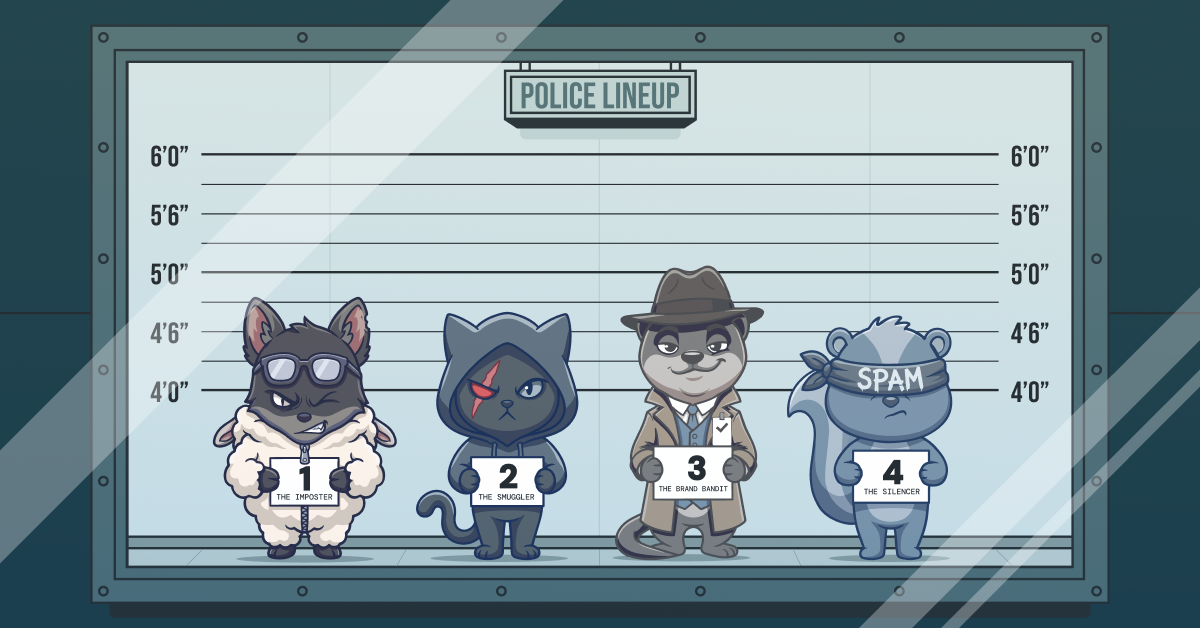
Your contact center is under near-constant threat, and the perpetrators don’t always stand out. Some impersonate your customers. Some disguise your outbound calls. Others hide disruptions until damage is already done. This lineup reveals the contact center culprits behind rising fraud attempts, sinking answer rates, and invisible threats across your voice network.
Contact centers’ most wanted
These offenders operate inside your call flows, slipping past agents, impersonating your brand, and masking trouble in your traffic. Study each profile carefully. Identify their tactics. Deploy the right tools to shut them down.
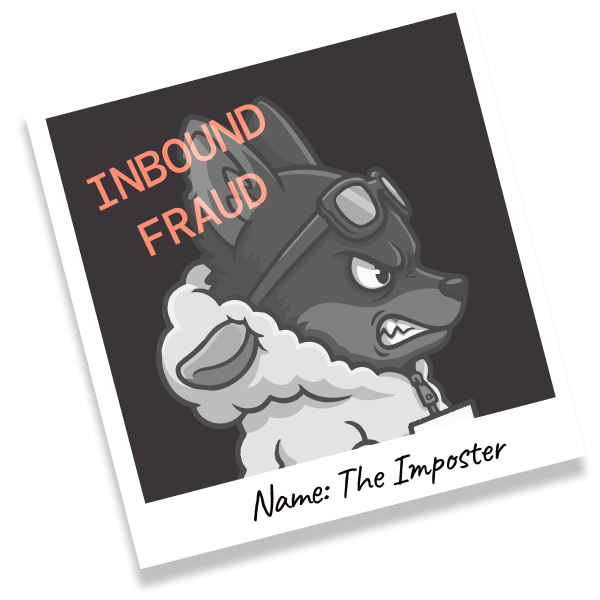
Suspect 1: The Imposter
Known aliases: The Deepfaker, The Infiltrator
Threat level: High
Impact: In‑depth call path disruption analysis
Charges:
- Impersonating real customers
- Using scripts, coercion to steal sensitive customer data
- Manipulating pressured agents using social engineering
- Increasing AHT and customer friction
How they operate
Contact center fraud in inbound calling continues to climb. This suspect exploits the agents using outdated knowledge-based authentication (KBAs) to their advantage while legitimate callers grow frustrated with additional authentication hoops to jump through.
How to apprehend
Most contact center leaders lose sleep over this one and for good reason. Traditional authentication (KBAs that take 30-90 seconds[1]) slows down real customers while skilled fraudsters still slip through. Social engineers know exactly how to exploit stressed agents, high call volumes, and rigid processes. Even with call recording or after-call audits, the fraud is already done by the time you catch it.
Existing CX tools and methods leave a dangerous blind spot in the call center’s first line of defense and blow up the Average Handle Time. Assuming that a typical agent call costs $1.00/minute, shortening caller identification by 20 seconds would save about $0.35 per typical call.[1]
Here’s how to shut this suspect down:
- Call Verification to spot potential impersonators and flag high‑risk callers
- Voice bioauthentication solutions like Pindrop for passive, multilayer authentication at the carrier level
Combined, these tools reduce AHT, cut friction, and detect sophisticated fraud rings your agents struggle to identify on their own.
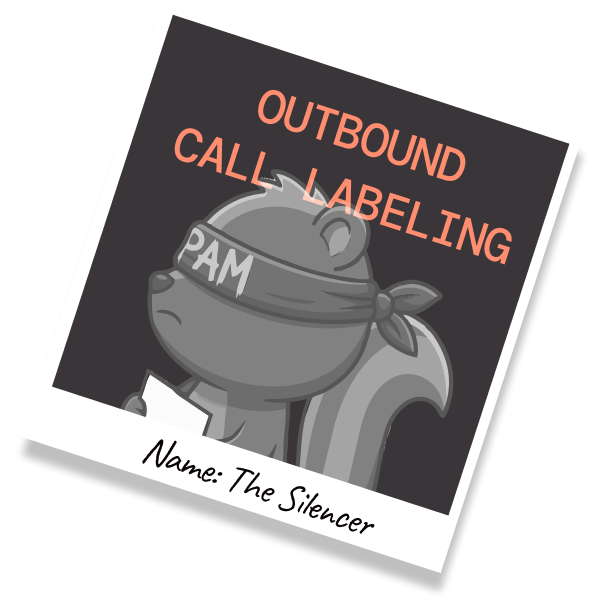
Suspect 2: The Silencer
Known aliases: Scam Likely, The Unknown Caller
Threat level: High
Impact: In‑depth call path disruption analysis
Charges:
- Masking legitimate calls with ‘Spam Likely’ or ‘Scam Risk’
- Creating widespread mistrust of your legitimate numbers
- Causing missed revenue, appointments, and connections
How they operate
85% of consumers won’t touch a call they don’t recognize. This suspect thrives on ‘unpicked call purgatory’. When a carrier attaches a ‘Spam’ or ‘Scam Likely’ tag on your legitimate outbound traffic, your reach doesn’t just dip, it craters.
How to apprehend
Most contact centers play a reactive game of Whac-a-Mole, only looking for this suspect when a customer complains or a VP’s personal cell flags their own office as ‘Scam’.
Or they reactively monitor 1-2 carriers at a time for how their calls are being labeled. But answer rate decline is a multi-carrier, multi-vendor issue. Without a unified view with full visibility into your call labels, you’re just guessing in the dark.
Here’s what actually restores trust:
- Number Reputation Management (NRM) services to register your numbers and monitor call reputation across all major US carriers and consumer apps in one place and remediate improper spam/scam labels.
- Bandwidth’s Identity Presentation(Coming soon), our solution for branded calling via trusted third-party partners, to ensure the right display, branding, and trust indicators get through—not blocked, blank, or mislabeled.
Suspect 3: The Brand Bandit
Known aliases: The Brandjacker, The Shapeshifter
Threat level: High
Impact: In‑depth call path disruption analysis
Charges:
- Manipulating branded displays to impersonate legitimate businesses
- Creating widespread mistrust of unknown numbers
- Preventing Branded displays from reaching customers or arriving marked as spam/scam
- Causing missed revenue, appointments, and connections
How they operate
Branded calls may end up being manipulated or impersonated or arrive with vacant displays.
How to apprehend
Contact center leaders fear this suspect because branded calling, a significant CX investment, can be hijacked by impersonators. When customers think your brand betrayed them, it’s your credibility that takes the hit, not the fraudster’s.
Pre-call authentication is the answer but often these tools need to be integrated at the SBC-level, which is a dealbreaker for your cloud migration.
To stop brandjacking without slowing down your migration, you need network-level truth before the call even reaches the consumer’s screen:
- Pre-call authentication using Bandwidth’s Identity Authentication API ensures only legitimate calls can carry your brand, preventing bad actors from hijacking your branded call display. This API sits inside the Bandwidth cloud and does NOT require on-prem infrastructure for pre-call verification.
- Bandwidth’s Identity Presentation(Coming soon) enables accurate, trusted branded displays.
When your brand shows up consistently and correctly, answer rates rise, and fraudsters lose their favorite disguise.
Suspect 4: The Smuggler
Known aliases: The Blindfold, The Smokescreen
Threat level: Medium
Impact: In‑depth call path disruption analysis
Charges:
- Concealing fraud patterns in inbound traffic
- Obscuring outbound spam labeling
- Preventing visibility into traffic health
- Forcing leaders into reactive firefighting
How they operate
This suspect thrives in the black box around your voice performance—letting fraud, mislabeling, and anomalies go unnoticed until customer complaints surface. Lack of visibility leads to revenue loss and reputational damage.
How to apprehend
This one keeps leaders in reactive mode: you only know something’s wrong when complaints spike, SLAs fail, or executives ask why revenue dipped last quarter. Existing monitoring tools often show aggregate data, not patterns. They don’t catch anomalies until they’ve already spread across your network.
Silent failures—dropped calls, mislabels, odd traffic spikes, fraud probes—hide in this darkness.
To bring the anomalies to light, you have:
- Voice Insights + Anomaly Detection for Voice (ADV) deliver early warning signals on unusual call behavior, potential fraud patterns, or performance degradation
- Number Reputation Management adds visibility into outbound call labeling, so you see issues before answer rates tank
Once leaders can actually see the problems in real time, they can act strategically not reactively.
Case closed.
These bad actors rely on misdirection, mislabeling, and invisibility to disrupt customer trust.
No single point tool can stop them. And juggling scattered solutions only drains time and budget. Bandwidth’s contact center security and trust services let you tackle contact center fraud as the multi‑faceted threat it is, helping you reveal their tactics, protect both inbound and outbound communications, and act before issues turn worse.
Get a more detailed analysis of your inbound and outbound call paths and how and where these suspects impact your calls.
Case closed…until the next suspect surfaces.
[1] – Neustar, Whitepaper, Knowledge-based Authentication Threat
[2] – Numeracle, A New Era for Caller ID: Placing Trust at the Heart of the Conversation