Easy as API
Voice-enabling your application is as easy as sending and receiving HTTPS requests. Developers can quickly use any software language with our Voice API – including Node, Java, Ruby, Python, and C#.
AI-Ready Voice Calling API
Easily add inbound and outbound voice calling and AI agents into your application. All with one programmable voice API—no telecom infrastructure needed.


Integrate and automate your voice calling use case with Bandwidth’s powerful and programmable Voice API.

Voice-enabling your application is as easy as sending and receiving HTTPS requests. Developers can quickly use any software language with our Voice API – including Node, Java, Ruby, Python, and C#.

Lean on our voice API experts and support teams to knock down any roadblocks for your dev team and take your voice capabilities to the next level. Our near-perfect CSAT reflects our focus on your success.

Our owned and operated network has a global reach of 65+ countries for the quality, control, and coverage to scale voice API efficiently—no matter where you grow.

You’ll get custom voice API pricing only a network operator can provide. Get for the throughput and capacity your applications need at 30% savings over the other guys.
Create a customer voice experience with all the voice API features you need to control and modify your call flow in real time.

Endless ways to customize a call flow with call transfers, bridging, forwarding, and more.

Convert messages into audio in nearly 30 languages. Choose an Enhanced voice for a human-like sound.

Convert audio into text for a call transcription. Choose Real-Time for live or instant access.

Record calls and voicemails in mono or dual-channel format, with 30 days of free storage.

Connect up to 20 people at once, or enable call whisper for coaching.

Connect to an agent if the call is answered, or leave a voicemail via audio file playback or TTS.

Fork real-time call audio via WebSocket to services like AI agents or machine learning.
Since we own our tier 1 network, as well as the APIs, we can give you pricing that other voice API providers can’t. And with 6-second billing increments, you only pay for the time you use, saving you and your customers money on every call.
| Service | Bandwidth | Typical competitor |
|---|---|---|
| US local phone number | $0.30 per month | $1.15 per month |
| US local outbound | $0.01 per min | $0.014 per min |
| US local inbound | $0.0055 per min | $0.0085 per min |
| Standard Text-to-Speech | $0.0007 per 100 char | $0.0008 per 100 char |
| Enhanced Text-to-Speech | $0.003 per 100 char | $0.0032 per 100 char |
| Standard Transcription | $0.045 per min | $0.05 per min |
| Real-Time Transcription | $0.0451 per min | $0.0451 per min |
| Recording | $0.002 per min | $0.0025 per min |
| Conferencing | $0.0015 per min | $0.002 per min |
| Answering Machine Detection | $0.006 per call | $0.0075 per call |
| Unidirectional Media Streaming | $0.0035 per min | $0.004 per min |
| Bidirectional Media Streaming | $0.004 per min | $0.004 per min |
Bandwidth is known for our award-winning support and telecom know-how. But when it comes to our Voice API, not everyone knows we compete on price to meet the needs of startups and hyperscalers alike.
A Voice API allows applications to access Bandwidth’s voice services using an HTTPS-based interface without the hassle of handling SIP infrastructure.
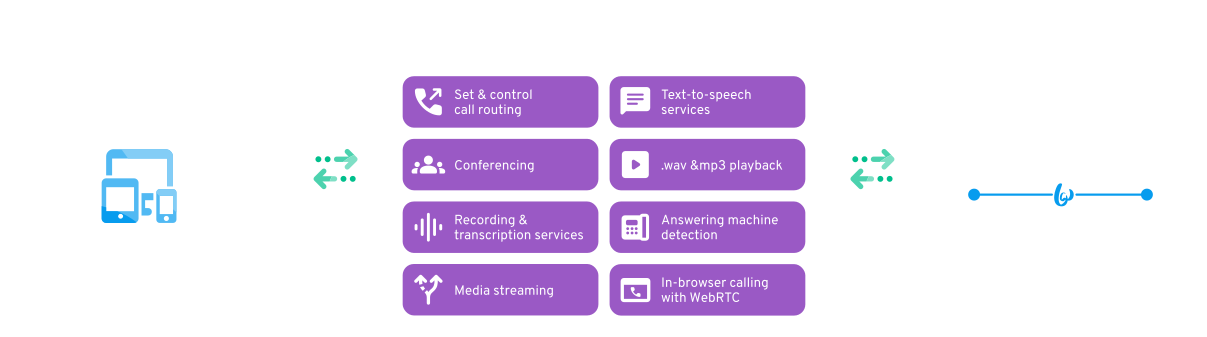
So rather than acquiring a telecom expert, our Voice API allows you to access voice capabilities via a set of well-defined APIs that any web developer can use to rapidly develop communications-enabled applications.
def transfer_call():

    """Transfer an incoming call to '+11234567892' with '+11234567891' as the Caller ID"""

    response = Response()

    speak_sentence = SpeakSentence(
        sentence = "Transferring your call, please wait.",
        voice = "paul"
    )

    phone_number = PhoneNumber(
        number = "+11234567892",
        transfer_answer_url = "http://myapp.com/announce"
    )

    transfer = Transfer(
        transfer_caller_id = "+11234567891",
        phone_numbers = [phone_number]
    )

    response.add_verb(speak_sentence)
    response.add_verb(transfer)

return response.to_bxml()Made by developers, for developers. Our powerful Voice API is dev friendly and has all the documentation you need to help you get voice up and running, no matter what you’re building.
Start the process to make calls with our Voice API, or talk to one of our experts to tap into our telecom and API know-how.

Build a better customer experience with this Voice API. Create a phone tree that gets customers to the right person faster.

Redirect incoming calls to an alternate phone number and accurately attribute calls by building a carrier-grade call tracking & analytics platform.

Turn search traffic into business. Enable click-to-call to remove barriers for customers connecting with businesses.

Send automated voice recordings to your customer’s phone, providing reminders, notifications, and alerts.

Build meaningful customer experiences by streaming real-time call audio to a voice bot, sentiment analysis, or voice biometrics tool.

Anonymize voice conversation by masking real phone numbers with proxy numbers, creating additional privacy for either calling party.

Now, you can go beyond basic outbound notifications and build conversational AI that has real customer conversations.

Free up your contact center staff members with easy AI offloading for routine inquiries.

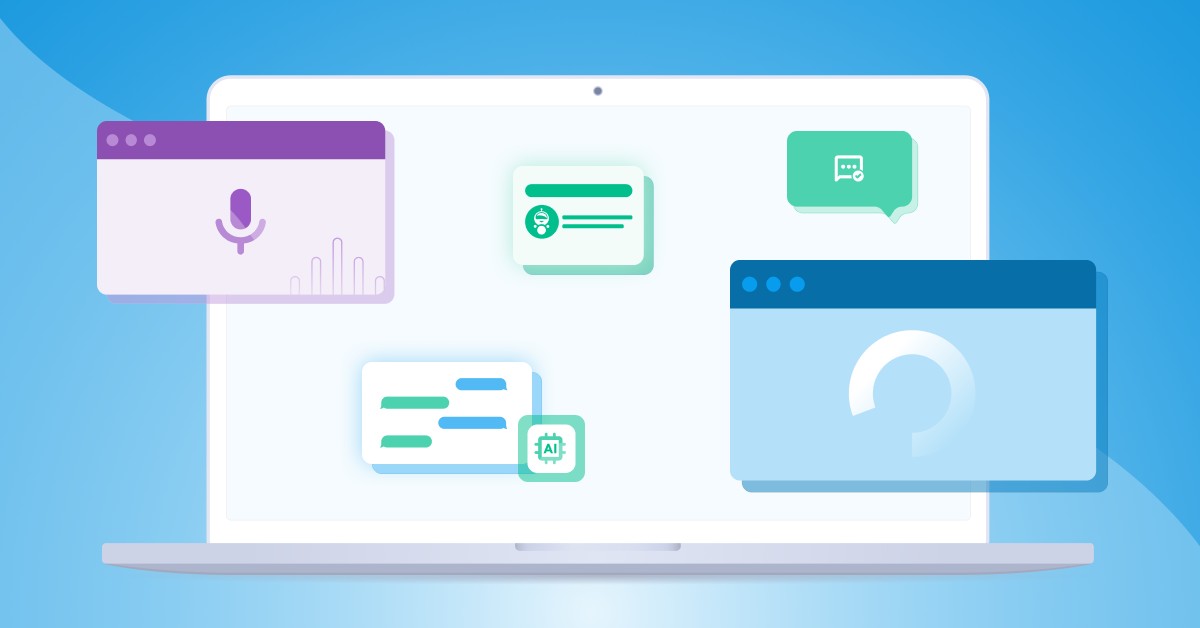
You can integrate your AI tool using media streaming, which leverages WebSockets to seamlessly connect to your own proprietary tools or third party solutions. Check out our developer docs for step-by-step guides and sample code to get started quickly.
A voice call API, or application programming interface, is a software connection that enables companies to embed the ability to make and receive voice calls into their applications, software, and networks. It may also be known as a programmable voice API, or phone call API.
While there are many ways to bill for voice services, Bandwidth uses 6-second billing. Unlike the standard 1-minute billing, this means you only pay for the time you use in 6-second increments, as opposed to 1 minute increments.
Bandwidth supports over 9,600 on-net rate centers, covering 93% of the U.S. population.
No. Bandwidth allows you to use numbers from other providers. That being said, Bandwidth has an industry-leading porting and number management experience, so you’ll want to have your numbers with us.
Bandwidth’s Voice API has a Voice XML called BXML. You can learn more about it on our Developer Resource site. Bandwidth does not provide a UI for building call flows, etc.
Yes. With the Bandwidth Voice API you can enable programmable calling in your application. This includes toll-free voice, as well as inbound and outbound (or termination and origination if you prefer the telecom terminology) voice calling from your application or software.
We support outbound calling to international numbers, provided your account has an international product provisioned. We don’t currently support calling from international numbers.
There are a number of applications you can build with Bandwidth’s Voice API, including an IVR, click-to-call capabilities, call tracking, and conversational AI to name a few.
All you need is a server for your application that can connect to Bandwidth’s server. There’s no need to have a SIP switch to connect; we handle all the telecom so you can focus on building great applications.
Bandwidth has messaging and emergency calling APIs, allowing you to build applications that can send and receive text messages, as well as contact emergency services.
While phone calls made using a Voice API can be powered over the internet (via DSL/cable modems), Wifi, and mobile networks, they also rely on a VoIP network to be completed. WebRTC audio calls are solely focused on browser- or application-based communications, which can also be connected into phone calls via a provider like Bandwidth. Learn more about Bandwidth’s WebRTC solution, In-App Calling.