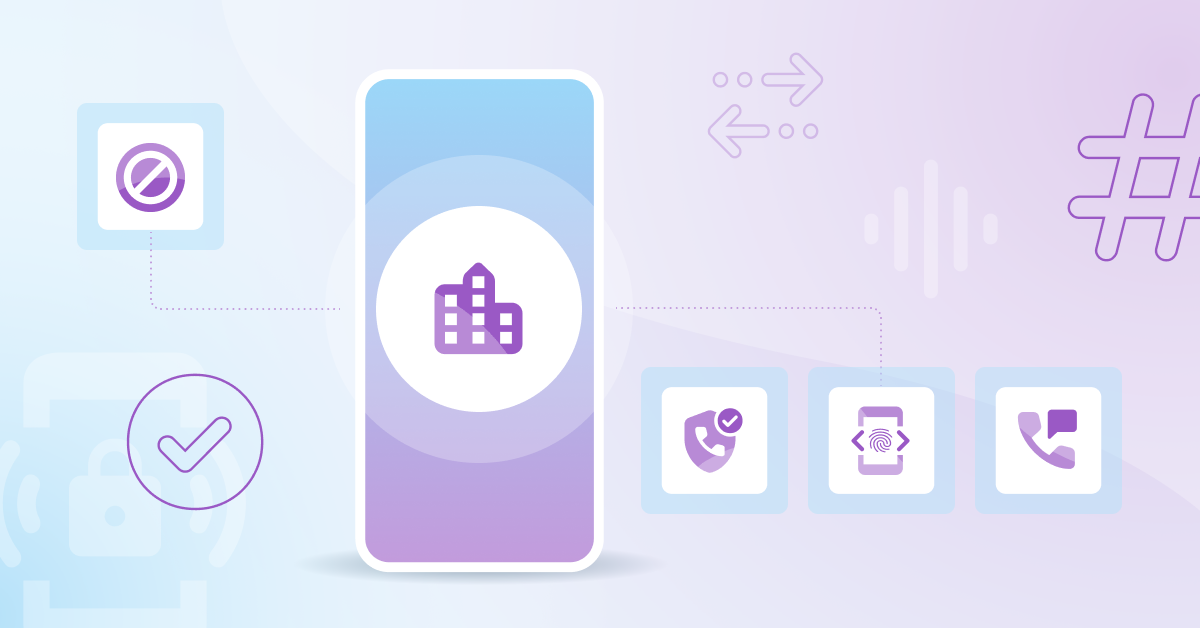
Consumers don’t trust the phone channel and enterprises are paying the price.
Scam and spam calls have pushed consumers into full‑blown avoidance mode. In 2024, the FTC logged 2.6 million fraud reports and more than $12.5 billion in losses, which increased 25% from the previous year.[1] That erosion of trust hits enterprises head‑on. With 85% of people rarely or never trusting caller ID from unfamiliar numbers, [2] legitimate calls—fraud alerts, appointment reminders, delivery updates—are being ignored. For large organizations, that means missed revenue, broken workflows, and contact center teams burning time dialing into the void.
Anti-fraud technological solutions are advancing but the downstream trust problem persists
Advanced technological solutions like STIR/SHAKEN play an important role in verifying the origin of a call across carrier networks. While STIR/SHAKEN continues to evolve and is an increasingly critical step in authenticating calls, fraud schemes continue to evolve too.
And unfortunately, consumers and their providers still can’t control how wireless carriers and analytics engines label calls being delivered to consumers’ mobile devices. While IP-based standards of STIR/SHAKEN are foundational, and call authentication is necessary, the large enterprises can take additional steps to monitor and protect their call outcomes.
The right call presentation capabilities can help
Branded calling solutions are improving as the communications ecosystem continues to embrace IP-based advanced capabilities. By sending rich call data (RCD) like your logo, name, and reason for calling straight to the mobile device, enterprises can exercise greater control over their call presentation and replace ‘Unknown Number’ with instant recognition. And the logic is solid: when people know who’s calling, they’re far more likely to pick up.
However, some branded calling solutions are only surface‑level and can’t secure the signaling underneath calls. If your network layer isn’t protected, spoofers can still impersonate your number and your branded call display. Additionally, if a carrier analytics engine has already tagged your number as ‘Spam Risk,’ that warning often overrides the branded display you invested in. You can’t out‑brand a mislabel.
Mislabeling itself is a growing problem. Carrier algorithms built to protect consumers can mistakenly flag legitimate high‑volume activity as suspicious. Without visibility into their voice traffic health, enterprises are left reacting to problems they never saw coming. A bank sending fraud alerts or a healthcare system sending reminders can trigger a false positive, leading to calls being blocked or mislabeled. The result: dropped answer rates, erosion of trust, and a brand that disappears right when customers need it most.
Trust requires a robust and technologically-advanced full stack: Reputation, authentication, and presentation
To communicate reliably, enterprises need a layered approach that protects their identity, ensures numbers aren’t mislabeled, and supports a consistent brand experience across networks. That’s why you need a trust stack that reinforces every step of the call path.
As a carrier with a global network and an industry-wide view of how this impacts contact centers, here’s how we break down those layers:
Layer 1: Number Reputation Management
When legitimate calls get mislabeled—and how to prevent It
The pain point:
53% of enterprise leaders say improper spam labels have caused a lower contact rate with their customers. Sudden spikes in call volume, like outage notifications or healthcare reminders, can trigger improper spam labels. Once ‘Spam Risk’ sticks, answer rates collapse, and your brand loses trust before the customer even hears the phone ring.
Only 42% of leaders said their contact center phone numbers were known to have been improperly marked as spam and 17% were unsure. What enterprises need is visibility into which numbers are being mislabeled and why, and then given a path to remediate these improper spam/scam labels.
WATCH: Why are my calls are getting labeled as spam?
The fix:

Bandwidth’s Number Reputation Management provides visibility into how your calls are being labeled across the major mobile carriers and via select consumer call blocking apps. It monitors your traffic patterns and, crucially, provides a mechanism to register your numbers and remediate improper labels.
If it spots an improper ‘spam’ or ‘scam’ label, Bandwidth steps in. We work directly with the major carrier analytics engines to request remediation on your behalf. And if the issue shows up in a consumer app, we’ll guide you through the exact steps to get that label corrected there too.It moves you from guessing why calls aren’t connecting to knowing and fixing the root cause.
Are your branded calls showing up as ‘Spam’?
Take a tour of how you can monitor and remediate call labels from ONE dashboard with Number Reputation Management.
The Bandwidth difference:
• Deeper insights from carrier‑level visibility into call performance data, including answer rates
• Faster remediation on your behalf by working directly with carrier analytics engines,
• Operational simplicity through a single dashboard covering all major carriers
We handle the ecosystem complexity so you don’t have to.
See how Outdoor Network fixed their reputation on outbound calls with NRM.
Layer 2: Identity Authentication
Stopping spoofers before they ever reach your customers
The pain point:
Even if your reputation is clean, sophisticated fraudsters can still spoof your numbers. Traditional pre-call authentication approaches require enterprises to integrate at the SBC level—which becomes a roadblock for teams moving to the cloud. Maintaining on‑prem hardware just to run a security API is expensive and slows modernization.
The fix:
Bandwidth’s Identity Authentication API (Coming soon) is a pre-call authentication solution that validates the caller, call recipient, and timestamp in real time. Working alongside analytics engines, it sends a secure token with each call, confirming your identity before the call reaches the consumer’s device. This way the Identity Authentication API can protect against spoofers trying to impersonate your call presentation to call recipients.
The Bandwidth Difference:
We treat authentication as a network‑native capability—not a hardware requirement.
• Cloud‑native integration with no SBC ownership or configuration required
• Real‑time validation built directly into the call flow
By authenticating at the network layer, we ensure branded displays only apply to calls that are truly yours.
Layer 3: Branded calling
The pain point:
Consumers are more skeptical than ever, and 80% of unidentified calls go unanswered.[2] When your calls show up as a random string of digits, customers pull back, leading to missed connections, frustrated users, and lost revenue. And trying to manage branded displays across multiple analytics engines is its own headache: fragmented workflows, inconsistent results, and a heavy drain on internal resources. Put simply, branded calling alone isn’t enough.
The fix:
New advanced call presentation solutions can deliver the visual reassurance customers need to pick up. By sending your brand name, logo, colors, and call reason directly to the handset, it replaces ‘Unknown Number’ with instant recognition and trust. When people know who’s calling and why they’re far more likely to engage.
Paired with a pre-call authentication, you get the optimum result: stronger brand presence, higher visibility, and better answer rates across the board.
Bringing it all together
Enterprises relying on branded calling alone are struggling to rebuild customer trust. Without strong number reputation and verified caller identity, a logo is just a coat of paint on a shaky foundation.
By approaching trust as a full stack—Reputation, Authentication, and Presentation—enterprises can build an outbound calling strategy that’s secure, consistent, and actually answered.
[1] – Federal Trade Commission, New FTC Data Show a Big Jump in Reported Losses to Fraud to $12.5 Billion in 2024
[2] – Hiya, State of the Call