Customer service has always been a balancing act between speed, cost, and quality, but AI chatbots for customer service are changing that equation. When deployed correctly, they can handle routine questions instantly, free up human agents for complex work, and scale support across voice, chat, and messaging without adding headcount.
That said, not every bot is up to the job. The difference between a helpful AI agent and a frustrating one usually comes down to the technology underneath.
Here’s what AI chatbots for customer service actually are, how they work, and what it takes to deploy one that customers don’t hate.
Key technologies behind AI chatbots for customer service
Several technologies work together to make a modern AI chatbot feel responsive and intelligent.
Natural Language Processing (NLP) and Machine Learning
Natural language processing (NLP) is the branch of AI that lets machines interpret human language. Combined with machine learning (ML), it enables chatbots to recognize intent, extract key details, and respond in a natural way.
Every interaction becomes training data. The more conversations a chatbot handles, the better it gets at understanding the quirks of your specific customer base, from industry jargon to common misspellings.
Sentiment analysis
Sentiment analysis helps a chatbot identify signals in customer language such as word choice, punctuation patterns, and message structure—that may indicate dissatisfaction or urgency. These signals can trigger an adjusted response cadence or prompt a handoff to a human agent.
That emotional awareness is what separates a bot that de-escalates an angry customer from one that makes the situation worse. It also tells the system when to hand off to a human, which is often the single most important decision a bot can make.
Voice-enabled chatbots: Speech recognition and text-to-speech
Voice is where AI customer service gets especially powerful. Speech recognition converts what a caller says into text that the AI can process. Text-to-speech does the opposite, turning responses into natural-sounding speech.
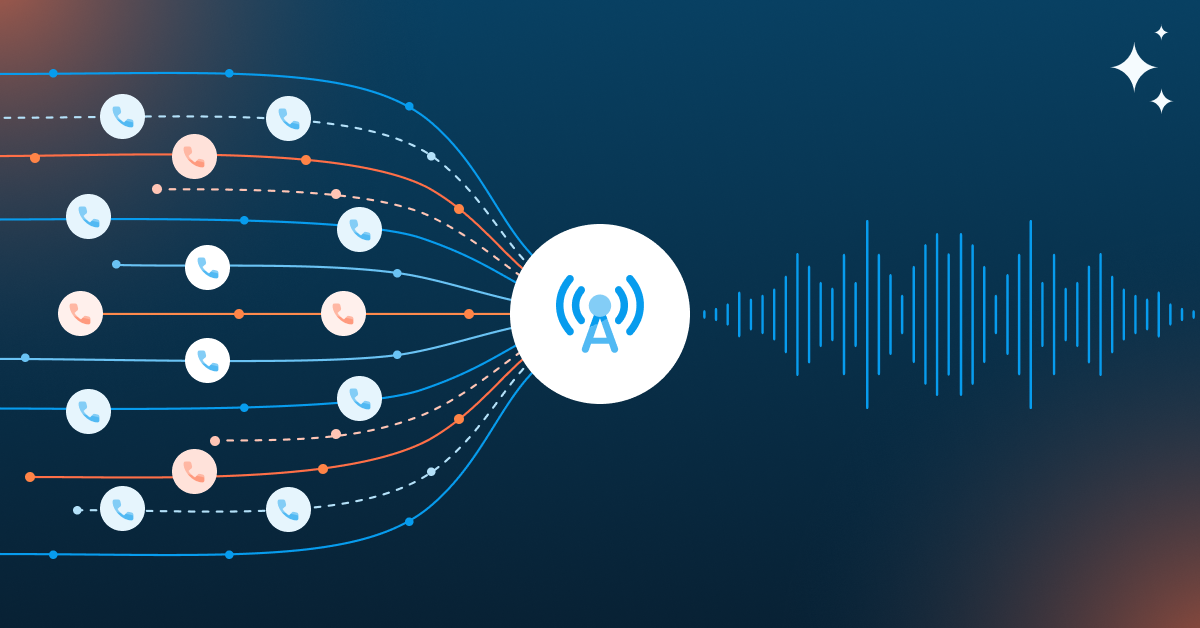
The challenge is latency. A good voice AI experience has to feel like a real conversation, not a walkie-talkie with a two-second delay. That requires tight integration between the telephony layer, the transcription service, the AI model, and the voice synthesis engine.
Why is the voice layer important to AI chatbots?
The voice layer is the ultimate proving ground for AI chatbots because phone calls remain the highest-stakes channel for customer service. When a customer picks up the phone, they expect a fluid, human-like interaction, not a frustrating series of awkward silences. This is where low latency becomes the make-or-break metric.
While a few seconds of lag is acceptable in text chat, a delay greater than 1200ms on a voice call destroys the illusion of intelligence, transforming a helpful AI into an infuriating “walkie-talkie” experience. To maintain a natural conversational flow, the underlying infrastructure must process speech recognition, AI reasoning, and text-to-speech synthesis in mere milliseconds.
An optimized voice layer bridges this gap, ensuring the chatbot can respond, interrupt, and pivot dynamically—delivering the kind of fluid interaction customers expect. This is why Bandwidth owns and operates its network with global reach: purpose-built infrastructure that enterprise AI deployments can rely on for real-time voice performance.
Without ultra-low latency, even the most advanced AI model fails because the user experience completely falls apart. Prioritizing a robust voice infrastructure is how enterprises like Wyndham deliver the real-time responsiveness that builds customer trust and successfully handles high-volume contact center demands.
Benefits of AI chatbots for customer service
The business case for AI chatbots comes down to a few clear wins:
- 24/7 availability. Customers get help at 2 AM, even though you don’t staff overnight shifts.
- Faster resolution times. Routine questions get answered in seconds, not minutes.
- Lower support costs. A well-deployed bot can handle a large share of tier-one volume at a fraction of the per-contact cost.
- Consistent answers. When sync’d with up-to-date knowledge bases, your customers will always get the most accurate answers.
- Scalable peaks. Seasonal spikes and product launches don’t require hiring scrambles.
- Better agent experience. Human agents spend their time on meaningful work, not password resets.
- Multilingual support. One system can serve customers in dozens of languages.
- Richer data. Every conversation becomes a data point you can use to improve products and services.
Customers benefit too. They get quicker answers, less hold time, and a more consistent experience across every channel.
Challenges and best practices in AI chatbot deployment
The teams that succeed tend to follow a few principles when deploying an AI chatbot.
Plan for voice. If you’re deploying in a contact center, voice channels usually represent the highest volume and the highest stakes. A chatbot that performs well in chat may struggle on the phone without the right infrastructure behind it.
Start with the right use cases. Not every interaction should be automated. Focus on high-volume, repeatable questions first, and leave complex or emotional conversations to humans until the bot has proven itself.
Invest in clean data. An AI chatbot trained on outdated or messy knowledge base content will produce outdated and messy answers. Audit your content before you train a model on it.
Design a graceful handoff. Customers forgive a bot that doesn’t know the answer. They don’t forgive one who traps them in a loop. Make it easy to reach a human and pass along the full context so the customer doesn’t have to repeat themselves.
Monitor and iterate. Track deflection rates, customer satisfaction, and the specific points where conversations fall apart. Use that data to refine prompts, add training examples, and tune the system over time.
Bandwidth’s Bring Your Own AI for contact centers
Most AI platforms focus on the intelligence layer. Bandwidth focuses on what it takes to make that intelligence work in the real world of enterprise voice.
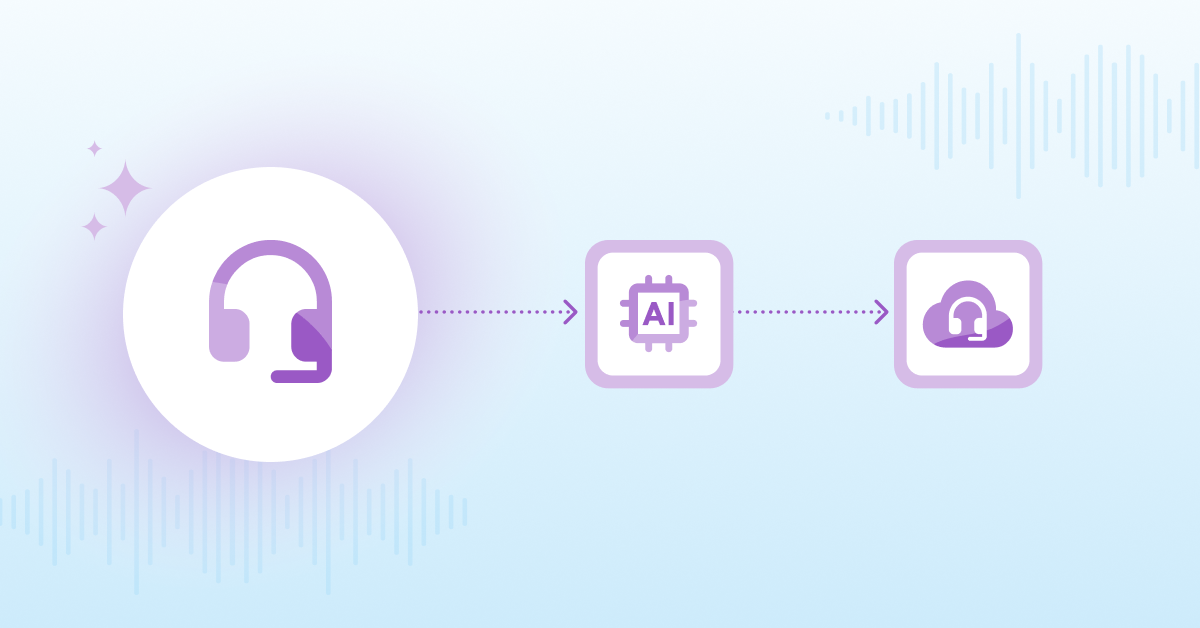
Our Bring Your Own Conversational AI approach lets you keep the AI models and vendors you’ve already chosen, while we provide the global voice network, media streaming, and telephony APIs that enable real-time conversation. No locked-in stack, no compromises on call quality, no surprises when you scale. See how to BYOAI works →
If your contact center is ready to move past scripted bots, learn how to integrate your preferred conversational AI with Bandwidth’s 100% uptime toll-free (in 2025) and see what purpose-built voice infrastructure can do for your AI strategy.
FAQ
An AI chatbot for customer service is a software agent that uses artificial intelligence to understand customer questions and respond in natural language. Unlike scripted bots, AI chatbots interpret meaning rather than simply matching keywords.
Core capabilities typically include:
- Understanding customer intent across text and voice.
- Holding multi-turn conversations with a memory of what was said earlier.
- Pulling information from knowledge bases, CRMs, and ticketing systems.
- Routing complex issues to the right human agent with full context.
- Operating across channels, including web chat, SMS, messaging apps, and phone.
When you integrate the best AI chatbots, you don’t replace human agents; your chatbots handle the volume so agents can focus on the conversations that actually need a person.
Traditional chatbots follow rigid decision trees. You click a button, and you get a preset answer. If your question isn’t on the menu, you’re stuck.
AI-powered chatbots work differently. They use machine learning and natural language processing to understand what a customer means, even when the wording is messy or unexpected. They improve over time, handle ambiguity, and can carry on a real conversation across multiple turns. The result is less “press 1 for billing” and more “how can I help?”