The terms “chatbot” and “conversational AI” get tossed around as if they mean the same thing, but they don’t. One is a specific kind of tool, while the other is a broader category of technology that can power much smarter tools, including chatbots themselves.
Knowing the difference matters. Whether you’re picking a customer engagement solution, building a voice AI product, or figuring out where your budget stretches furthest, the distinction shapes what you can actually deliver. It’s also one of the most common points of confusion when teams start scoping an automation project.
Here’s the short version: conversational AI can power chatbots, but not all chatbots use conversational AI.
Let’s break down what each one really is, how they compare, and when each one makes sense.
What is a Chatbot?
A chatbot is a software program designed to simulate conversation with a user. Most traditional chatbots are rule-based, meaning they follow predefined decision trees. When you click a button or type a specific keyword, the bot returns a pre-written response.
Think of the pop-up widget on a retail website that asks, “Are you looking for order status or returns?” You pick an option, and the bot guides you down a fixed path. These bots are fast to build and cheap to run. They work well for narrow, predictable tasks where user intent fits into a small set of options.
However, the moment a user says something unexpected or asks a question that isn’t in the script, the rule-based bot either fails, loops, or escalates the conversation to a human agent, as this is the limit of rule-based logic.
What is conversational AI?
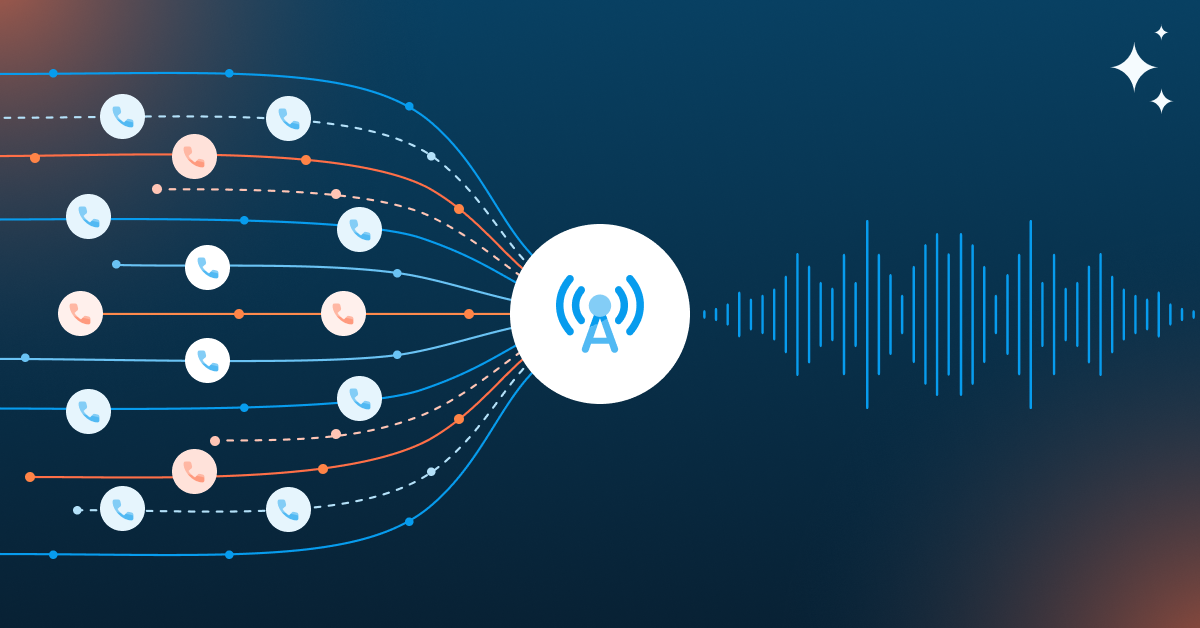
Conversational AI is the broader technology that enables machines to understand, process, and respond to human language in a natural way. It combines several techniques, including natural language processing (NLP), natural language understanding (NLU), machine learning (ML), and increasingly, large language models (LLMs).
Instead of matching keywords, conversational AI understands intent. It picks up context across a multi-turn conversation, recognizes subtle phrasing, and generates responses that adapt to natural language and handle variation dynamically. It also works across channels, from voice calls to chat widgets to messaging apps to SMS.
Voice assistants like Alexa and Siri leverage conversational AI, as do modern customer service agents capable of handling complex, multi-step phone requests autonomously.
The key point: conversational AI is a stack of capabilities that can power chatbots, voicebots, virtual agents, and plenty of other experiences you haven’t thought of yet.
Key differences between rule-based chatbots and conversational AI
The easiest way to understand how chatbots differ from conversational AI is to compare them side by side.
| Category | Rule-based Chatbot | Conversational AI |
|---|---|---|
| Technology | Relies on if/then rules and keyword matching. | Uses NLP, NLU, ML, and often LLMs to interpret language dynamically. |
| Flexibility | Only works within a fixed script. | Adapts to inputs it hasn’t seen before and handles variation gracefully. |
| Context | Treats each message in isolation. | Remembers what was said earlier and uses that context to shape the next response. |
| Channels | Typically lives on one interface, like a website widget. | Works across voice, chat, SMS, email, and more. |
| Learning | Doesn’t improve unless a developer updates it. | Can improve with additional training data to offer better responses over time |
| Cost and complexity | Cheaper and faster to deploy. | Takes more investment upfront but scales much further. |
| User experience | Feels transactional. | Adapts dynamically to the user’s input like a conversation |
If a rule-based chatbot is a vending machine, conversational AI is like a knowledgeable employee who handles a wider range of questions, adapts to unexpected questions, and escalates gracefully when needed.
Rule-based chatbot use cases
Rule-based chatbots still earn their keep. They’re a solid fit anywhere the conversation is predictable, and the stakes are relatively low. Common use cases include:
- FAQ automation. Answering routine questions about hours, shipping, pricing, or return policies.
- Appointment booking. Guiding users through a short form to schedule a service or demo.
- Order tracking. Pulling a status update based on an order number or email address.
- Lead qualification. Asking a few filtering questions before handing a prospect off to sales.
- Simple IT help. Resetting passwords, routing tickets, or sharing links to knowledge base articles.
For these scenarios, you need a fast, reliable way to get someone from point A to point B. A well-designed rule-based chatbot does that without the overhead of training models or maintaining a data pipeline, but the trade-off is rigidity. The second a user goes off-script, the experience falls apart.
Conversational AI use cases
Conversational AI shines when interactions get messier. It handles open-ended questions, shifting topics, and complex workflows that a scripted bot would fumble. Consider use cases like:
- Voice AI agents. Supporting customer service calls end-to-end, managing nuanced requests and escalating to human agents when needed.
- Healthcare triage. Helping patients describe symptoms in their own words and routing them to the right level of care.
- Financial services support. Walking customers through account changes, fraud alerts, or disputes across multiple conversational turns.
- Sales and personalization. Engaging shoppers in a real back-and-forth, answering product questions, and tailoring recommendations in real time.
- Multilingual support. Serving customers in dozens of languages without building a separate bot for each one.
- Employee assistance. Acting as an internal copilot for HR, IT, or knowledge management across an organization.
Voice is where conversational AI gets especially interesting. A conversational AI agent on a phone call needs low-latency audio, accurate transcription, and a rock-solid telephony layer underneath. That’s a very different engineering problem than running a chat widget on a website. It’s also where most teams hit the wall when they try to move from prototype to production.
Choosing the right solution between rule-based chatbots & conversational AI
The decision isn’t just chatbot vs. conversational AI, it’s also about the platform behind it.
If you’re experimenting, a rule-based chatbot might be enough. But if you’re scaling voice AI or building production-grade conversational experiences, you need more than just models. You need infrastructure that can keep up.
That’s where Bandwidth fits in. We work with teams building conversational AI at scale, providing the owned-and-operated voice layer that makes real-time AI interactions low-latency—with global coverage to match. From media streaming to global voice coverage, we handle the telecom so you can focus on the intelligence.
See how Wyndham is building with Bandwidth →
See Bandwidth’s AI solutions →
NOTE: As you build, disclosure is worth thinking through carefully. Regulations governing AI interaction notices are evolving rapidly across jurisdictions—from the EU AI Act to US state-level requirements—and vary significantly in scope and application. As a best practice, we encourage transparency with end users whenever AI is involved in a conversation. Consult your legal counsel to understand the specific obligations that apply to your deployment.