The contact center isn’t only humans helping humans anymore. There’s often a third participant in the mix. Sometimes it handles initial customer conversations. Sometimes it feeds personalized insights to the agent. However it shows up, contact center AI (CCAI) now functions as a team member, helping tackle inquiries more effectively than agents or AI could on their own.
Thinking of hopping on the AI call center trend? Let’s look at where CCAI adoption stands today, the trade-offs between building and buying CCAI, and how to make sure your contact center stays resilient in the AI age.
The current intel on CCAI adoption
While humans still trump bots in customer service, CCAI is making up ground. In 2025, 87.2% of contact centers had AI or machine learning deployed, and 84% of customers are aware of AI handling their service requests. Younger generations tend to be far more AI-receptive, though, compared to Gen X, Baby Boomers, and the Silent Generation. 63% of Gen Z and 60% of Millennials trust chatbots and virtual agents, with roughly a third of both groups finding them very helpful and efficient.
So, what are the top AI tech that contact centers are adopting today? Here’s the list from the Enterprise Communications Landscape 2025.
Top 6 contact center AI solutions
- Chatbots Advanced chatbots make traditional IVR conversations feel more human. Instead of navigating tedious button presses, callers talk naturally, and their requests are either handled by the voice bot or routed to the appropriate department.
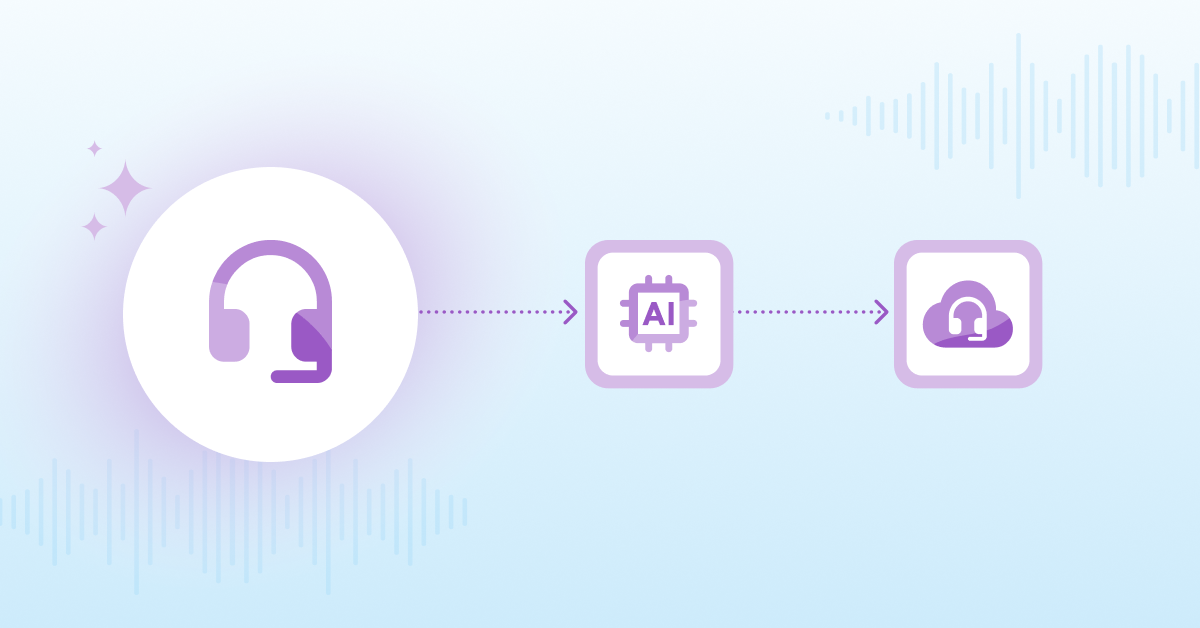
- Agent Assist As customers explain the reason for calling, Agent Assist pulls their history, analyzes sentiment, suggests solutions, or recommends products to upsell or cross-sell, so agents stay focused instead of digging for information mid-call.
- Call Transcription CCAI can turn speech to text automatically and eliminate frantic note-taking. The call transcriptions are stored as searchable logs, which also makes it easier for agents to reference past calls. They come in handy for training and compliance.
- Call Summarization With CCAI wrapping up interactions into concise summaries, agents or team leaders get quick context without combing through full call recordings or transcriptions. This also helps them be more productive by reducing their after-call work.
- Voice Bots Voice bots make traditional IVR conversations feel more human. Instead of navigating tedious button presses, callers talk naturally, and their requests are either handled by the voice bot or routed to the appropriate department.
- Intelligent Call Routing Use AI to assess what a customer wants to route the call to the appropriate team. Then use sentiment analysis to gauge customer reaction to route for appropriate and targeted escalation.
Stack these contact center AI solutions together and see more satisfied customers and efficient agents. Contact centers stand to benefit, too, with conversational AI integrations projected to cut $80 billion in agent labor costs by 2026. The payoff is there; now the next question is: should you build your own CCAI, or use prebuilt AI in the contact center?
Build vs. buy your CCAI: What’s best for your AI call center?
The custom build advantage
If flexibility comes first, custom building gives you a CCAI that works how you want it to. You can train it on your own data (brand voice, chat transcripts, company policies, and industry lingo), so interactions come across as natural as speaking to a live agent.
You get more control over data security, too. For those with complex compliance needs, custom development lets you configure contact center AI solutions around specific regulatory standards.
And because you’re not restricted to a single provider, you can bring in the platforms you prefer and customize your CCAI without needing the vendor to roll out new features. Or you can even change vendors whenever it suits you.
The prebuilt advantage
Running short on resources? Prebuilt AI in the contact center gets things moving without heavy customization or lengthy development cycles. You can deploy standard CCAI workflows in hours instead of weeks or months.
Prebuilt AI call center solutions also let you avoid high upfront spending and plan monthly or annual expenses more reliably than with custom builds.
The tradeoff is flexibility. Prebuilt platforms operate within a vendor’s framework, which could lack the features you need. Still, if speed and cost efficiency matter, buying your CCAI is the smart choice.
What’s the better path for you? There’s one more factor to weigh: the carrier supporting your CCAI implementation.
The role of carrier reliability in the future of AI in the contact center
Even the most advanced contact center AI solutions crumble when the infrastructure isn’t built for the heavy bandwidth they require, and the strain grows as CCAI adoption rises year over year.
According to Gartner, 1 in 10 agent interactions will be automated by 2026, while 25% of organizations will depend on chatbots as their main customer service tool by 2027. By 2029, agentic AI will tackle 80% of routine issues without human help.
These projections mirror the fact that 92% of companies are planning to boost AI spending in the next three years. But without the right carrier partner, CCAI performance challenges could undermine those investments.
How do you choose a carrier that won’t compromise your AI call center initiatives?
Carrier questions every contact center must ask before adopting AI
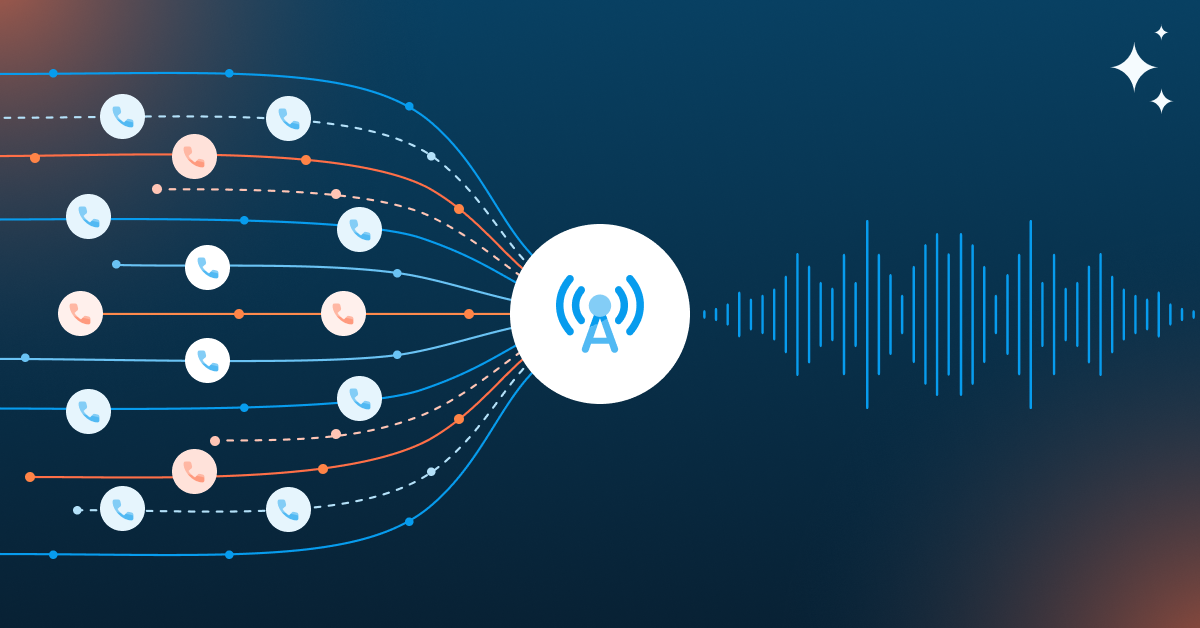
- How do you handle AI implementation at scale? CCAI puts an enormous load on networks. To keep conversations flowing naturally, your carrier must maintain low latency and high uptime, especially when traffic spikes.
- How resilient is your network against outages? Reliable carriers must have environmental awareness, including disaster recovery plans. Consider data center redundancy, failover routing, backup power and cooling, and climate-risk mitigation measures.
- Are security and compliance integrated into your contact center AI solutions? Carriers must safeguard sensitive customer information in line with GDPR, HIPAA, PCI DSS, and other applicable standards.
Power your AI call center with future-ready carriers
In the US, 79% of AI experts estimate that people interact with AI multiple times daily. So when customers reach out to your business, they’re already primed to expect some degree of speed and smarts they get from other tools they use. That’s why AI in the contact center shouldn’t be treated as just another shiny new fad. It can raise the bar for CX and AX when implemented with intention and reinforced with the right infrastructure.
Want to know how AI could work in your contact center? Talk with our human experts about contact center AI solutions and make smarter decisions about artificial intelligence.