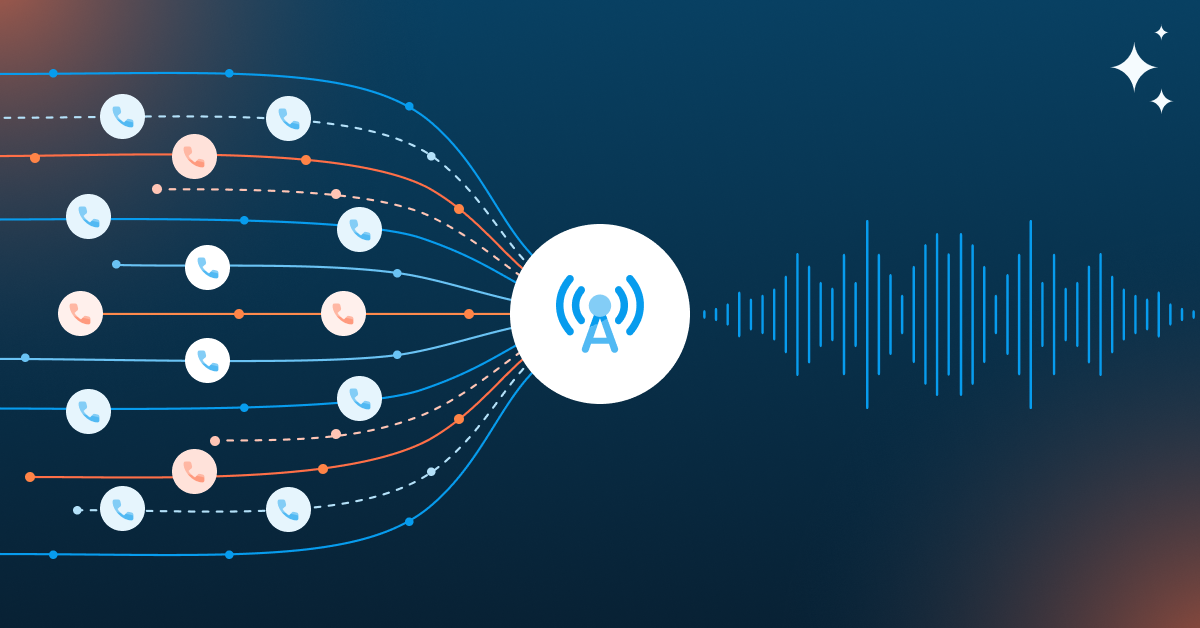
Before catastrophes force people to shelter or entire neighborhoods to evacuate, the Voice AI agent does exactly what the flawless demo promised. But can the model perform as expected when policyholders flood the claims line?
At 5x the usual call traffic, the AI agent goes wide from its promised KPIs. It shows up with the dreaded lag at the moment where customer frustration is high, if the call reaches it at all. Some policyholders hear delayed prompts and start repeating themselves. Others hang up before the claims intake or the first notice of loss (FNOL) begins.
Call failure or call abandonment during a catastrophe is as much a CX problem as it is an IT incident. It can add to claims-handling costs and give a policyholder one more reason to switch insurers come renewal. Frustration also registers in satisfaction scores: Overall customer satisfaction scores are more than twice as high (777) when customers say it is very easy to communicate with their insurer than when they say it is very difficult or somewhat difficult to communicate with them (337).[1]
Voice AI can’t make claims intake easy while the network struggles under CAT volume. IT has more decisions to get right than the demo suggests.
How carrier fails your claims intake
When CAT events trigger increased claims intake or FNOL calls, the best customer service scripts or empathetic sign-offs won’t help contact centers handle the rush. The added volume puts infrastructure through a three-way stress test way ahead of the policyholder-agent interaction.
- Can the carrier absorb a volume surge?
Hurricanes and wildfires may increase claims call volume 2-10x within hours. The carrier accepts and routes those calls, and each active connection counts toward the configured concurrency limit. IT should verify the threshold because new callers may fail to connect once available capacity runs out.
- Does the carrier meet the latency intolerance threshold?
Voice AI works within a 200- to 500-millisecond target. With audio traveling through the carrier network to the STT-LLM-TTS chain and back again, the network uses some of the latency budget. Network delay adds to response time, and model tuning can’t get back milliseconds spent in transit.
- Is the carrier equipped for a fraud spike?
False claims enter the intake queue alongside legitimate losses, so you need early screening to divert higher-risk calls sooner. Contact center security comes into play at the network level, where calls are given a real-time spoof and fraud score before the Voice AI agent collects claim details.
All three tests belong to the carrier. A CCaaS vendor’s uptime SLA only tells you if the platform is available. The carrier layer sets the main hurdle for AI agent performance under CAT-related claims intake FNOL traffic.
The latency issue that a fast AI model won’t fix
There’s a reason why you tune the model over and again, but it hallucinates or picks up the intent incorrectly.

1.4–1.7 seconds vs. 200-400 milliseconds
Median production Voice AI response latency compared with the human conversation threshold
The call path shows where the extra latency comes from. Caller audio enters the PSTN and passes through a carrier SIP trunk to STT. The LLM takes the STT transcript and writes the response. TTS turns the response into synthesized audio, and the carrier returns it to the policyholder. IT teams often tune the AI processing in the middle of the chain when delays are at the network layer on both ends.
Insurance contact centres that rely on resold network capacity are worse off. CAT traffic adds more delay at the network layer when a regional route is congested. While network owners redirect traffic themselves, network capacity resellers have to request the routing change from their upstream carrier.
Engaging a carrier that owns its network has its perks
For instance, being a network owner, Bandwidth manages routing templates for its customers. Since Bandwidth controls the network route, it updates the templates and makes 1,000+ proactive routing changes per year around call path degradations, regional outages, and market impairments.
What does the right carrier infrastructure for Claims intake Voice AI look like?
The insurance contact centres that are serious about having Voice AI field their claims intake should check for the following factors in their carrier layer:
- Direct PSTN ownership, not resold network capacity: Owned networks control routing directly. Resellers wait on upstream carriers when incidents spike. What each carrier defines as “owned network” could be different. Here’s how you distinguish IP ownership from PSTN infrastructure ownership.
- Network latency that protects the AI latency budget: The call path must leave as much of the 200–500ms window intact as possible for STT, LLM, and TTS.
- Decoupled architecture: Network and AI vendor decisions stay separate. When you bundle AI with an unreliable network, you have two failure points within one black box.
- Compliance at the carrier layer: Obligations covered by SOC 2 Type II and PCI DSS etc. must cover telephony, not just the AI stack.
- SLA-backed uptime for surge conditions: 99.995%+ uptime across a wide geography and customer base indicates that the carrier holds up when CAT volume spikes. Look for the geographical and architectural redundancies offered by that network provider.
The convenience of bundling AI with the carrier comes with a catch
Insurance IT teams that have navigated a UCaaS or CCaaS migration with bundled calling plans know how vendor lock-in affects cost and control. Putting Voice AI and the carrier under one provider introduces similar tradeoffs.
Less independence when troubleshooting.
Degraded audio and a bad model response can be traced to different failure points, but they funnel into the same support queue. If diagnosis stalls, resolution stalls, and the claims line stays degraded longer.
Less network-side perspective.
The same provider becomes the failure point for both network and model. It’ll be harder to rule the network in or out as the source of the problem.
Less flexibility to change providers.
Decoupled architectures let IT replace the AI or carrier independently. In a bundle, changing one layer may pull the other into scope.
Other industries are coming to this conclusion faster. Bookline separated AI and telephony rather than choosing an all-in-one provider. It kept conversational AI in its own tech stack and used Bandwidth for telephony. The company reported 45% cost savings from telecom consolidation over 18 months and a 95% reduction in troubleshooting efforts.
What insurers get from AI-ready carrier infrastructure
First notice of loss quickly turns into a second or third attempt when the call path hits a snag. AI readiness at the carrier layer reduces disruptions early in the call, so insurers have less to sort out during a spike.
Surge- resilience: An owned carrier network with over 99.999% core network uptime (including during surges) indicates that the carrier-resilience will not falter under the surge load.
Authentication ahead of AI intake: Suspicious calls go through extra verification at the network level first. ANI validation, ML-driven fraud database checks, checking call patterns and voice biometrics, and deepfake detection can flag higher-risk callers before the AI agent decides how to proceed with claim intake or FNOL.
Direct control of the PSTN connection: Insurers have a provider that carries the phone-network leg of the claims call. An IP backbone alone doesn’t give you that level of ownership because you depend on an upstream carrier for the PSTN portion of the call.
Bandwidth is a facilities-based CLEC under the Telecommunications Act of 1996. At the local exchange, Bandwidth interconnects directly with the PSTN through ILEC agreements, including AT&T, under FCC oversight. FNOL calls originate and terminate on Bandwidth-owned infrastructure, and Bandwidth is legally accountable for the PSTN connection.
Compliance checks at the carrier layer
Renewal calls with payment workflows can bring parts of the voice stack into PCI DSS scope, while automated outbound claims follow-ups may trigger TCPA requirements.
IT should confirm the carrier has the required coverage rather than assume the CCaaS agreement applies to it.
Bandwidth’s voice infrastructure for AI is developed for HIPAA-aligned environments and is audited yearly for SOC 2 Type II. Its services support PCI DSS and TCPA requirements in insurance workflows.
Ask as much of the network layer as the AI model
Under CAT traffic, a carrier problem might look like an AI problem because callers experience it through the agent’s response or lack of one. But the network layer determines whether policyholders begin claims intake on the first call or have to try again.
Treating the symptom at the model layer won’t cure what’s wrong in the call path. Talk to a Bandwidth expert about AI-ready voice infrastructure for insurance contact centers.