
Blog
Contact Center
Toll-Free
Voice
VoIP Origination
STUDY UP TO STAY AHEAD
Your insurance toolkit
Find our most popular resources for insurance enterprises tackling critical challenges like voice fraud, cloud migrations, and more. Because when policyholders call, you can’t afford to compromise.
Most-searched insurance contact center topics
Securing the voice path
In this three-part series for CX and telecom leaders, we address what’s happening in the call path with spam mislabeling, number reputation management, and inbound fraud prevention.
Caller authentication at the carrier layer
KBAs are insufficient against AI-powered fraud and frustrate 46% of callers. Learn about authentication models that can hold up against AI, without introducing more customer friction.
Cloud, hybrid, and the importance of Active/Active carrier setup
Whether you’re fully on-prem, fully cloud, a mix of both, or in the middle of a big move, this insurance-focused webinar discusses the network criteria you need to consider for a safe, secure contact center.
Can’t-miss guides
The Insurance contact center carrier audit
Ensure your contact center is ready for volume surges with this essential carrier audit.
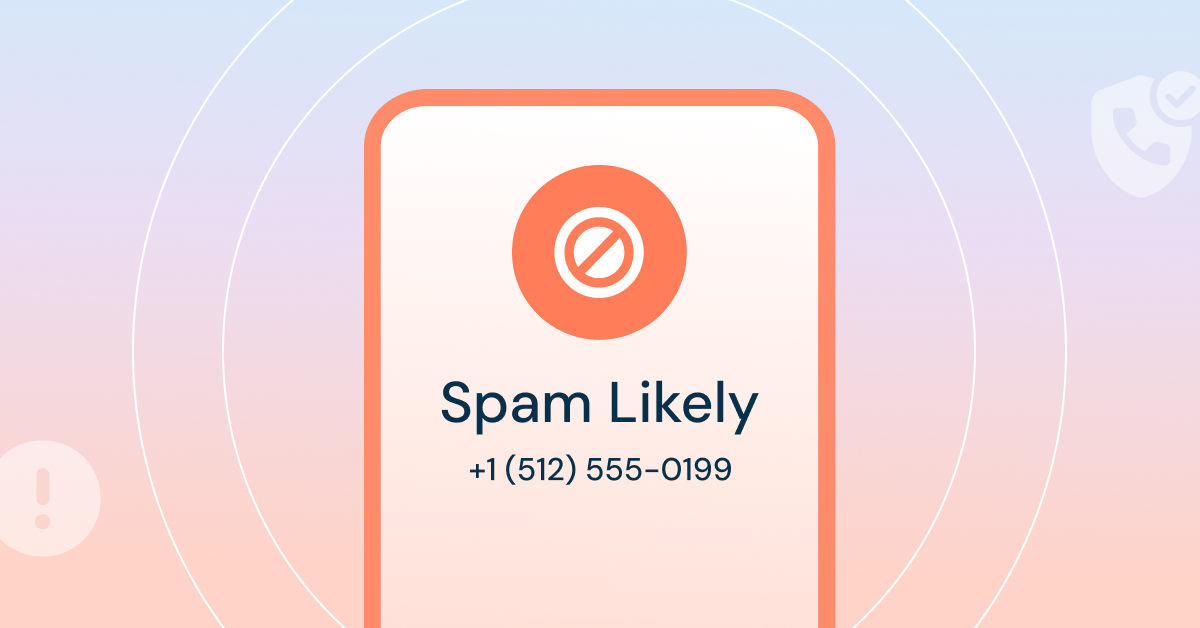
Why policyholders don’t answer your calls
Find out why your claims adjusters’ calls are going unanswered in this new report.
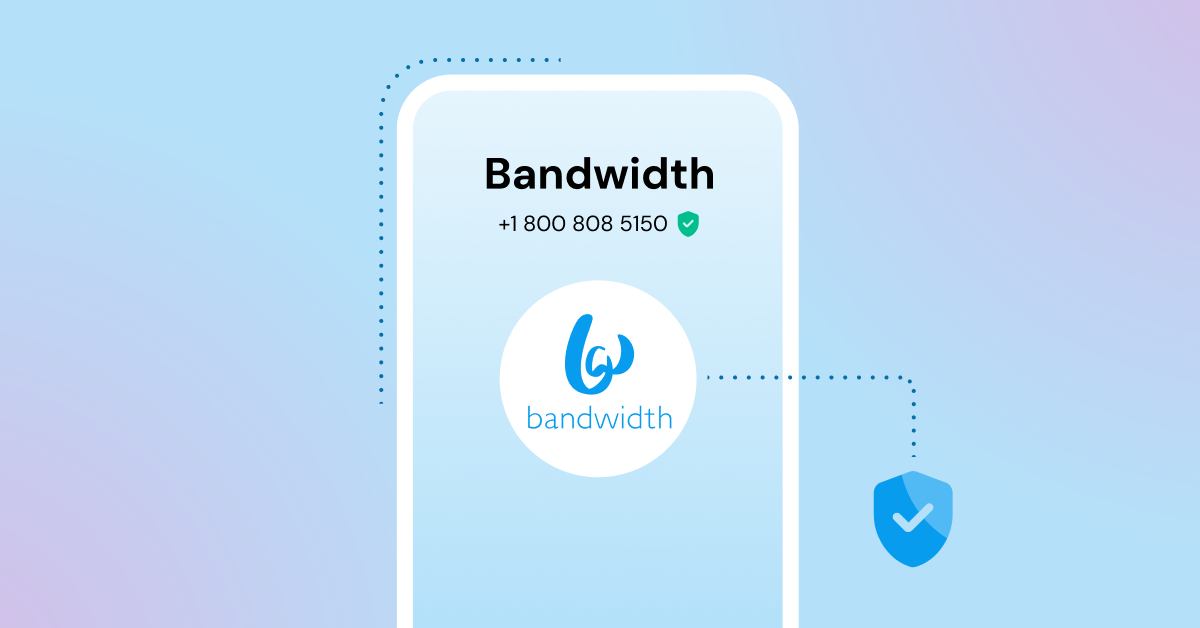
Outbound voice solution overview
See how Bandwidth’s Number Reputation Management and Authenticated Branded Calling solutions protect Insurance contact centers’ outbound voice and help improve the call answer rates.
A real-world case study
For enterprise healthcare and insurance organizations, the cost of communications failures shows up in real, tangible ways: in missed calls, frustrated policyholders, and fraudulent claims that erode the bottom line.
One large health plan knew that managing four separate vendor portals was both inefficient as well as risky. By consolidating onto the Bandwidth Universal Platform, their team removed redundant workflows and regained control of their communications stack without adding headcount.
Fraud prevention is another area where they see the contact centers shifting focus. Call verification solutions are reducing fraud exposure and delivering cost and handle time savings compared to manual verification.
The throughline across all of these: organizations like this health insurers are turning to Bandwidth to get time back, reduce risk, and unlock capacity to do more.
How Bandwidth supports the Insurance industry
Bandwidth is the global communications platform built on our owned network and AI-ready infrastructure, so insurance enterprises can deliver intelligent, reliable experiences at scale.
Specifically, we give Insurance companies peace of mind with a 5x redundant toll-free network*, inbound and outbound fraud prevention tools, and the most direct-to-carrier BYOC integrations in the industry.
Frequently Asked Questions
It depends on what you’re optimizing for. Most insurance agencies evaluate phone systems at the platform level. They pick a contact center application or CCaaS based on agent interface, IVR customization, and reporting dashboards. While that’s a good starting point, as your business scales, that approach puts you at the mercy of upstream carriers with whom you don’t have a direct relationship.
When there’s a catastrophe event or hurricane season, your claims lines are over capacity. Calling plans bundled with CCaaS are served by CCaaS-native carriers, and you’re one step removed from them in case of an outage or if you need more capacity.
Bringing Your Own Carrier (BYOC) to your contact center platform gives you better control over your resilience and capacity. The phone systems that perform best for insurance contact centers share a few carrier criteria: carrier-grade toll-free redundancy (so claim lines hold during volume surges), STIR/SHAKEN authentication, fraud and brand protection, and direct SIP trunking that isn’t locked to a single carrier path. If you’re evaluating options or auditing your current setup, the Insurance Contact Center Carrier Audit walks through the carrier layer criteria by category so you can set up call-surge resilience at both the carrier and contact center platform level.
Scale creates a specific kind of infrastructure problem for insurance contact centers: the call volume spikes are no longer predictable, and your carrier layer often isn’t able to absorb them. Your customers get left in a lurch at critical times like the CAT season.
Adding agent seats and CCaaS licenses gives you visible capacity. But the important question is whether your carriers absorb sudden 3x or 5x traffic increases without putting policyholders on busy lines. It requires elastic toll-free capacity, programmatic call routing controls you can adjust without a carrier support ticket, and enough carrier redundancy that a single network outage doesn’t take down your entire operation.
Bandwidth’s toll-free network is built on direct peering with four Tier 1 carriers in addition to our own network, which means if one path goes down, calls automatically redistribute across the remaining active routes. This happens without any provisioning request or manual rerouting. As your insurance business grows, your infrastructure scales seamlessly in the background.
Talk to an enterprise communications expert about what elastic carrier infrastructure looks like for your growth stage.
When a catastrophe happens, the outages originate at the carrier layer. Network switches get flooded by surging calls. Local carrier infrastructure may lose power or capacity. For outage-susceptible insurance contact center setups, this shows up as in:
- Network congestion at local exchanges
- Voice outage if the operation is dependent on single carrier
- Troubleshooting delay as the IT team has no way to distinguish a software queue problem from a network-level failure
The instinct during a catastrophe event is to look at the contact center platform capacity. But the carrier layer takes the hit before the calls even reach the IVR. For a detailed walkthrough of how to build genuine CAT season resilience from the carrier layer up, read CAT Season Contact Center Resilience Starts at the Carrier.
CCaaS failover kicks in when something breaks as the call arrives at your contact center: calls reroute to a backup queue, overflow to voicemail, or redirect to another agent pool.
Carrier-layer redundancy goes one level deeper. It determines what happens to a voice call before it ever reaches your CCaaS platform. If the network delivering calls to your IVR goes down, CCaaS has nothing to work with at all. That policyholder just never reaches you and you don’t find out they’re trying to contact you—which is even more critical during a catastrophe.
This is the difference to remember when strengthening your contact center’s capacity and resilience: Your CCaaS failover is only as good as the carrier infrastructure feeding it. An Active/Active carrier layer has multiple active carrier paths handling live traffic simultaneously, so if one path fails, calls flow across the remaining routes automatically. The policyholders and your agents avoid the switchover downtime.
See how Bandwidth’s Active/Active architecture works and why it’s different from Active/Passive disaster recovery.
The insurance contact centers successful at handling call surges during CAT events share a trait: they have stronger control over their carrier layer.
A CCaaS bundled calling plan black boxes the carrier layer. During a CAT event, if you face an outage, you aren’t able to pinpoint what went wrong—which means you aren’t able to predict or solve it.
With a carrier-level architecture like BYOC (Bring Your Own Carrier), your contact center has programmatic control over how inbound traffic is flowing or how it can be distributed across multiple active networks.
For practical guidance on what to audit before storm season at the carrier layer, the Insurance Contact Center Carrier Audit walks through five infrastructure categories that determine whether your toll-free setup can actually brave a catastrophic surge.
A full breakdown of the type of Active/Active carrier layers that easily absorb call surges is here.
Spam mislabeling snowballs quickly into a major operational headache and dents the bottom line for insurance outbound teams. It’s often invisible until answer rates have already dropped significantly. Your agents keep calling, and policyholders keep seeing “Spam Likely.” Calls go unanswered.
Seamlessly resolving spam mislabels requires automation: proactive phone number reputation monitoring and number remediation requests direct to carriers on your behalf.
Bandwidth’s Number Reputation Management service handles both. It monitors your numbers against major spam databases in real time, and when a number is mislabeled as spam, Bandwidth works with trusted third-party partners to remediate it. Paired with Authenticated Branded Calling, which helps prevent bad actors from impersonating your brand on outbound calls, you get comprehensive coverage from both mislabeling and impersonation.
Call quality monitoring tools operating at the application layer are useful: they record calls, score agent performance, flag keywords, and generate sentiment analysis. But insurance contact centers also need quality monitoring at the carrier layer. A transcription failure, a voice AI accuracy drop, or an agent scoring anomaly could trace back to call quality degradation that started at the carrier layer—poor audio, packet loss, latency—before the call ever hit your recording software. Without carrier-level visibility, your QA team is troubleshooting symptoms without access to the cause.
What to look for in call quality monitoring, specifically for insurance contact centers: real-time MOS (Mean Opinion Score) tracking at the carrier level, the ability to identify whether a quality issue originated on your carrier’s network or a peering partner’s, and direct escalation paths to network engineers when an issue surfaces at 2 AM during a CAT event. Application-layer monitoring plus carrier-level observability is the combination that gives your operations and QA teams a full picture.
Bandwidth provides carrier-level visibility into call paths and voice quality—the layer most monitoring software doesn’t reach. Talk to an expert about what that looks like in practice for your infrastructure.
Inbound voice fraud, a direct threat to insurance contact centers, shows up in three key ways:
- Impersonators file false claims
- Social engineering attacks extract policyholder account information from agents
- Synthetic voice attacks are designed to bypass IVR authentication that was built for human callers
The authentication stack your contact center needs has to address all three.
At the network level, ANI (Automatic Number Identification) validation helps verify that the number presenting on an inbound call matches a verified originating source, catching impersonated numbers before they reach an agent. Call verification that surfaces a fraud risk score before the call reaches an agent helps reduce knowledge-based authentication frustration.
Voice biometrics add an identity verification layer which is difficult for bad actors to research and replicate. See how Bandwidth’s caller authentication and fraud mitigation stack works for insurance contact centers.
The core problem with bundled calling plans during a natural disaster is that your CCaaS platform and your carrier are the same dependency. When the CCaaS-native carrier gets overwhelmed by a regional surge, the platform has nowhere else to route traffic. Policyholders get busy signals while agents are underutilized.
BYOC breaks that dependency and hands you the control. By separating your carrier from your contact center platform, you get direct control over your toll-free numbers, SIP trunks, and routing logic. During a CAT event, that control means your IT team can redistribute inbound traffic across multiple active carrier paths programmatically, without waiting on a CCaaS platform’s escalation queue.
If you’re evaluating BYOC for your contact center, the Genesys BYOC walkthrough is the fastest way to understand how carrier decoupling works in practice. The full business case, including Active/Active architecture and how to audit your current infrastructure for CAT readiness, is in CAT Season Contact Center Resilience Starts at the Carrier.
*Available in key markets. Check coverage for more information.
Related posts
Blog
AI
Voice
Three patterns for deploying voice AI
Blog
Contact Center
Toll-Free
Voice
VoIP Origination
What’s the damage? Calculate the cost of CAT-season call failures
Quick Guide
Contact Center
Number Reputation Management & Branded Calling